
 Tuesday - May 15, 2012
Que The Music But Don’t Press Play Yet
Sorry to paraphrase a line from Agent 86 there, but come on. Look at the headlines! I had the Wagner all queued up, ready to go. Helicopter assault on pirate stronghold, woo hoo! Finally!
This is why you always have to read past the headlines.
EU carries out first airstrikes against Somali pirate targets
BRUSSELS – The European Union says its naval force off the Somali coastline has carried out its first air strikes against pirate targets on shore.
A spokesman said maritime aircraft and attack helicopters took part in the attacks early Tuesday along the coastline.
EU Force Bombs Somali Pirates’ Supplies in First Land Attack
The EU naval force operating off East Africa conducted its first air attack to destroy Somali pirates’ equipment on land, deploying a new tactic to protect the region’s merchant shipping.There were no Somali casualties as a result of the assault, which took place earlier today, the European Union’s naval mission covering Somalia said on its website in an initial assessment.
Somali piracy: EU forces in first mainland raid
EU naval forces have conducted their first raid on pirate bases on the Somali mainland, saying they have destroyed several boats.
The EU forces were transported by helicopter to the pirate bases near the port of Haradhere.
Anti-piracy forces have been reluctant to attack mainland bases, fearing for the crew of captured ships.
...
The attack was carried out overnight and, according to the European forces, no Somalis were hurt during the action.The multinational forces used helicopters in conjunction with two warships to leave five of the pirates’ fast attack craft “inoperable”.
EU Naval Forces Attack Somali Pirate Bases
In what is seen as a significant change in tactics, a single attack helicopter - the nationality of which is not yet known - launched air strikes against targets on the Somali shore overnight on Tuesday.
No casualties have been reported following the raids, along the country’s central coastline in the region of Galmudug, but boats and equipment belonging to pirates are said to have been destroyed.
...
The area hit has a low population but during a reconnaissance mission, a large number of skiffs - dinghies with large outboard motors - were spotted, suggesting the presence of pirates.
...
With an annual budget last year of more than 8m euro, the EU-NAVFOR mission is to protect vessels passing through the area, to deter and disrupt pirate operations, and to provide up to date information to ships in the region.
...
All EU nations and some non-EU countries contribute to the force either with warships, maritime patrol aircraft or with desk staff.Their rules of engagement are limited by a UN charter. Although this is sometimes seen as a frustrating tie, the commander believes the operation is working.
“What I am commanding here is a constabulary operation, effectively it is a law enforcement action against a criminal act,” he told Sky News.
So one whirlybird went in after dark and shot a few holes into less than half a dozen fiberglass skiffs, at at least two locations. So we’re talking less than three motorboats per area. No casualties, no arrests, no rescues, no burning supply depots, no nada.
Two Cub Scouts with a BB gun, indeed.

a comic opera Valkyrie for a comic op

Posted by Drew458
 on 05/15/2012 at 09:07 AM
Filed Under: • Pirates, aarrgh! •
• Comments (3)
 •
Trackbacks(0)
Permalink •
•
Trackbacks(0)
Permalink • Monday - May 14, 2012
I haven’t missed not doing these posts
I haven’t done a Somali Pirates story in a while, mostly because there hasn’t been one to do. For half a year or so they’ve been batting a big fat zero, between the typhoon season, resistance by commercial shipping, and what amounted to a near blockade of their coasts by international naval effort.
Maybe if Obama could come out of the closet and be pro-pirate, he could add another color to his rainbow halo and this problem would just go away.
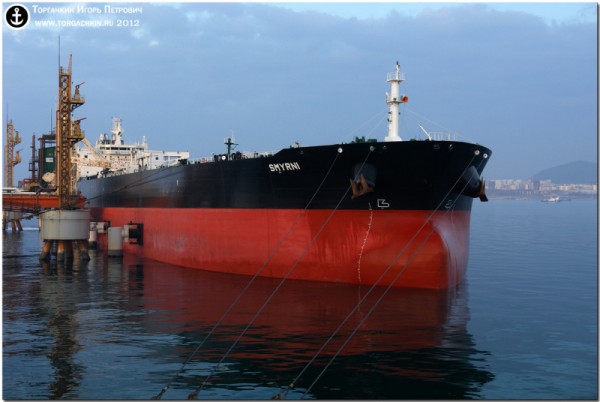
10.05.2012: 0923 UTC: Posn: 15:58N – 061:02E, (Around 250nm SE of Ras Al Madrakah, Oman), Off Somalia.
Ten Pirates in two skiffs armed with automatic weapons chased a crude oil tanker underway. The tanker enforced anti piracy measures, increased speed, made evasive manoeuvres and managed to evade the boarding attempt resulting in the skiffs regrouping with the mother ship in the vicinity. Later, the skiffs launched a second attack on the tanker, approached at a speed of 24 knots and managed to successfully board and hijack the vessel and take hostage the 26 crew members.
MT Smyrni was seized approximately 285 nautical miles southeast of Somalia. Pirates hijacked a Liberian-flag oil tanker with 26 men on board in the Arabian Sea off the coast of Oman on May 10. The MT Smyrni was reportedly sailing from Turkey with a cargo of 135,000 tons of crude oil when it was seized approximately 285 nautical miles southeast of Somalia.
“No communications have been received from the ship since the ship was boarded,” ship owner Dynacom Tankers Management said.
The 149,998-deadweight ton Smyrni, which joined Greece-based Dynacom’s fleet last year, was on its second voyage.
“The Liberian government is in the know of the matter and we are closely watching the developments,” the Indian Shipping Ministry said.
Reports said the ship was attacked twice before being boarded by armed pirates. The ship’s crew included 14 Filipinos, 11 Indians and one Romanian. According to the International Maritime Organization, African pirates are holding captive about 300 crew members on some 17 ships.
The tanker’s capture comes after a recent fall in the number of hijackings in the region. The drop has been attributed to plans by several countries to allow ships using their flags to sail with armed guards. It has not been reported, however, whether the Smyrni had such guards on board.
We have seen a surge of recent attacks over the last few days in the general vicinity of the Smyrni hijacking. Earlier on Thursday, a tanker evaded an attack while underway approximately 262nm ENE of Socotra Island, Yemen. The IMB report states that six pirates in a skiff approached and fired upon a tanker underway from a distance of 500 meters, but were turned away after an armed security team aboard the vessel returned fire at the skiffs.
Wednesdays violent attack on a crude tanker occurred approximately 345nm ESE of Socotra Island, Yemen, as shown here on the map.
On Wednesday, reports came of a violent attack against an unidentified crude tanker underway approximately 345nm ESE of Socotra Island, Yemen. The pirates in that attack allegedly fired over 300 AK47 rounds and 7 RPG rounds at the vessel from a distance of just 50 meters. The vessel in that attack was able to avoid being boarded but did sustain damage.
UK’s The Guardian said the hijacking of the MT Smyrni was the first successful attack by pirates on an oil tanker off the Horn of Africa in a year.
OceanUSlive.Org, a social networking site for the maritime industry, said the attack was one of four to have taken place in the Arabian Sea in the past few days after a lull in pirate activity.
The MT Smyrni is a Suezmax class carrier that can transport 1 million barrels of oil, compared to the 3 million barrels that the largest ULCC carriers can handle. The ship is almost brand new, 275m in length. When loaded she has a top speed of 9 knots.

The Combined Task Force 151 (CTF151) has decided to stop pursuing Somali pirates who captured a Liberian-flagged tanker carrying about 135,000 tonnes of crude oil for PTT Plc in the Gulf of Eden on Thursday after receiving a report that the pirates have taken the tanker to the Somali coast and demanded a ransom, a navy source said.
The source, citing information from Thai navy officers operating with CTF151, said the task force, commanded by Rear Adm Thanin Likitwong of the Thai navy, could not take action to retake the tanker because in doing so it needed the consent of its owner, the owners of the crude oil and their insurance company.
The tanker, MT Smyrni, is owned by Dynacom Tankers Management of Greece.
“More importantly, the vessel has no citadel for the crew to hide in safety and no armed guards. Therefore, it would not be safe for the 26 crew members if an operation is launched to retake the tanker,” the source said.
None of the crew was Thai. The source said when the tanker was attacked by the pirates it was about 800km from the Somali coast in an area in which there were no battleships.
Fort Victoria, a CTF151 ship with 16 Thai navy officers on board, followed the tanker from a distance but took no action due to concerns for the crew’s safety.
The pirates have contacted the tanker’s owner and the insurance company is expected to quickly negotiate with them because the 135,000 tonnes of oil belongs to many firms including PTT Plc of Thailand.
No permission for a rescue from the owners, and a brand new ship with a $115 million cargo at sea in dangerous waters without guards or even a safe place for the crew to hide. Gee, I’m sure her crew is really happy about those cost saving gestures right now.
Posted by Drew458
on 05/14/2012 at 08:09 PM
Filed Under: • Pirates, aarrgh! •
• Comments (3)
•
Trackbacks(0)
Permalink • Monday - April 09, 2012
Good Enough
Iran’s state TV says the country’s navy has rescued 28 crew members of a Chinese ship hijacked by pirates.
The Saturday broadcast says the Iranian navy also detained nine Somali pirates in the operation in the Arabian Sea in the north of the Indian Ocean.
The pirates attacked the ship Friday but they surrendered after Iranian navy sent warships to rescue the crew and free the ship. The freighter was carrying iron and was heading to a port in southwestern Iran.
So, will their group beheading be shown on TV? Surely piracy must be a crime under islam, right? Don’t hold your breath. I wonder if Iran is practicing Catch ‘n Release with these guys, fellow muzzies and all, right?
h/t to Rich K
Posted by Drew458
on 04/09/2012 at 08:59 AM
Filed Under: • Pirates, aarrgh! •
• Comments (1)
•
Trackbacks(0)
Permalink • Friday - March 23, 2012
You Could Knock Me Over With A Feather
I sure didn’t see this one coming. Not in my wildest dreams
yesterday -
EU to back strikes on Somali pirates
2012-03-22 22:36Brussels - The European Union will probably approve plans on Friday to strike Somali pirate equipment on beaches, widening the scope of its naval operations four years into a mission to protect shipping.
Germany had voiced reservations about plans to allow EU warships and helicopters to fire at trucks, supplies, boats and fuel stowed on the coast of Somalia, but a minister indicated on Thursday that Berlin would now back the plans.
“Military officers say they want to render harmless the ships on the beach that could be used. This was a convincing argument,” German deputy defence minister Christian Schmidt said after a meeting of EU defence chiefs in Brussels.
EU officials have stressed that the new mandate would not call for the deployment of troops on the ground in Somalia.
“We made clear that this should be limited actions against assets on the edge of the beach. Piracy must be fought at sea,” Schmidt said.
Following months of debate, the decision is expected to be taken when EU foreign ministers meet on Friday, one day after the defence chiefs, EU officials said.
today -
EU Extends Counter Piracy Mission Off Coast of Somalia
March 23, 2012, published in News, Press Releases by EU NAVFOR Public Affairs Office
On Friday 23 March 2012 the Council of the European Union confirmed its intention to extend the EU Naval Force (EU NAVFOR) counter-piracy mission, Operation ATLANATA off the Somali coast until December 2014. At the same time the Council also extended the area of operations to include Somali coastal territory and internal waters.
Today’s decision will enable Operation Atalanta Forces to work directly with the Transitional Federal Government and other Somali entities to support their fight against piracy in the coastal areas. In accordance with the relevant UN Security Council resolutions, the Somali government has notified the UN Secretary General of its acceptance of the EU’s offer for this new collaboration.
Speaking about the extension of the mandate and area of operations, Rear Admiral Duncan Potts, who is the Operational Commander of the EU Naval Force, said “The extension of the mandate until the end of 2014 confirms the EU’s commitment to fighting piracy off the Horn of Africa. Piracy has caused so much misery to the Somali people and to the crews of ships transiting the area and it is right that we continue to move forward in our efforts”.
Unreal.
But don’t confuse this EU initiative with what NATO is up to out there. That’s a separate mission, and it too is continuing.
(BRUSSELS) - NATO agreed Monday to extend its anti-piracy mission off the coast of Somalia until the end of 2014, stressing that foreign navies are helping to reduce the number of hijackings.
Operation Ocean Shield, which currently has four warships at sea, has patrolled the Horn of Africa, acted to disrupt armed robberies on the high seas and escorted UN ships bringing aid to Mogadishu since 2008.
So the ships of the navies of various EU nations are going to start shelling the beaches of Somalia, but the ships of the navies of various EU nations that are part of the NATO operation will continue to do interdiction and rescue only at sea. It’s probably the same ships. They’ll just get a Time Out from the admiral, and furl the little blue NATO flag.
I want to know two things: 1) will the EU define “the beach” the proper way, ie “anything we can hit within the range of our cannons”, about 20 miles give or take; and 2) where can I buy tickets to the show?
Let’s hope that their navies still have some large guns they can bring to bear. More good news: even if the EU decides to take a literal littoral view and defines “beaches” as that sandy bit by the waves, the breakaway chunk of northern Somalia now know as Puntland is putting its anti-pirate land cops back in action.
As the world descended on London to discuss the mess that is Somalia, it was announced that the Puntland Police will be reactivated to hunt down pirates ashore.
Speaking to the media at the event, Puntland’s interior minister Abdullahi Ahmed Jama proudly boasted that the “Puntland Maritime Police Force” will be resuming operations imminently and their brief will be to target pirate gangs on land. The initiative is to be funded by the UAE government and the personnel will be trained by a private security firm.
The PMFF was initially established back in 2010, but was suspended after the UN grew concerned about their operations and the legality of their actions.
Oh, and all of this is being done with the happy approval and cooperation of what passes for government in Mogadishu. “Kill them all, we don’t care.” is their take on the whole situation.
Posted by Drew458
on 03/23/2012 at 02:22 PM
Filed Under: • Pirates, aarrgh! •
• Comments (3)
•
Trackbacks(0)
Permalink • Monday - February 27, 2012
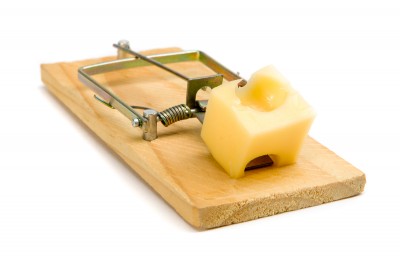
I Think I Smell Cheese
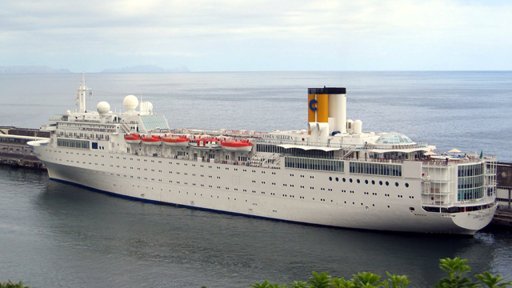
More than a thousand people are awaiting rescue on the Costa Allegra cruise ship after a fire broke out on board causing the luxury liner to lose power.
The ship is adrift in the Indian Ocean more than 200 miles from the Seychelles island nation off mainland Africa, an area that is infested by pirates.
This is the second emergency situation this year for Costa Cruises which is owned by Carnival Cruises. In January, 32 people were killed when the Costa Concordia capsized after hitting rocks off the Italian island of Giglio. Seven people are still missing and presumed dead.
“The passengers and crew are in safe condition,” said Commander Cosimo Nicastro of the Italian coast guard. “They are not necessarily comfortable because the ship only has emergency power on board, but they are safe.”
“The winds right now are blowing at about 25 knots but we are not worried because it is a big ship, so the weather is not a concern,” Nicastro said.
He said the Italian coast guard used satellite systems to spot nearby vessels that have agreed to assist in the emergency. A French fishing boat should reach the Allegra tonight. Another fishing boat should arrive by 5 a.m., and three merchant ships are also on the way.
Meh heh heh ... If I was king of the world, I would have done this one years ago. But with the world focus on Iran, and the various economies going in the drink, now may actually be a better time. We seem to have forgotten about Somalia and the pirate plague. Or so they may think!
Sure, the ocean liner had a fire. And it has no engines. And the wire service article says a couple of fishing boats and perhaps a merchant marine ship might be able to get there in a day or so. No word on any Navy ships or helicopters or anything like that. But what if the 1000+ passengers ... were Rangers and Seals? Bait like this will draw every Somali pirate within 1000 miles, and the ship is only a couple hundred miles off their coast. And perhaps drifting closer. This could be a purrrrrrrrfect opportunity ...
Posted by Drew458
on 02/27/2012 at 05:17 PM
Filed Under: • Pirates, aarrgh! •
• Comments (4)
•
Trackbacks(0)
Permalink • Tuesday - January 31, 2012
Picture of the Day
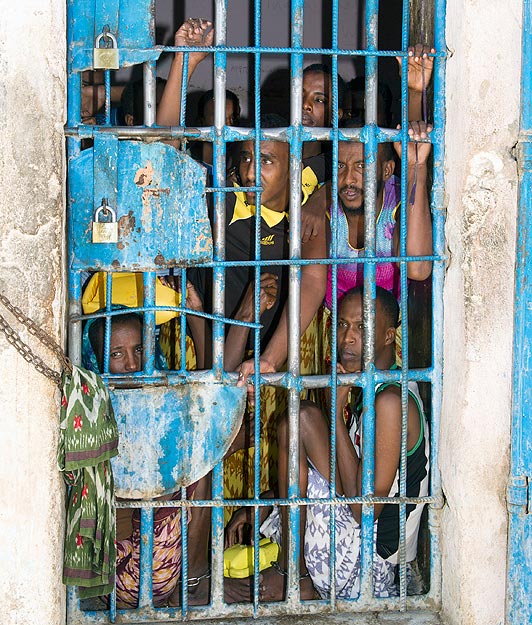
Prisoners grasp the bars of a hell-hole jail cell — a stark warning of the fate that awaits Somalia’s notorious pirates.
Posted by Drew458
on 01/31/2012 at 10:53 AM
Filed Under: • Pirates, aarrgh! •
• Comments (4)
•
Trackbacks(0)
Permalink • Saturday - January 28, 2012
pirates and travelers. all brothers under the skin color
Here’s what’s in some of the papers tomorrow or on the radio today.
Go figure. Was a time when pirates were simply deep 6’d and forgot about.
How times and pc thinking have changed. And not for the better.
Here’s the headline.
Somali pirates captured by navy to face court in Seychelles
Right. That’ll put the frighteners on em ok.
Britain has agreed to what has been described as a “ground breaking” deal with the Seychelles, who will prosecute 14 pirates in return for help building and running its prisons. The Seychelles agreed to prosecute after about $300,000 was earmarked to improve prison capacity.
Would it not have been more cost effective to let the vermin drown after firing their boat? Just asking.
Then this little blurb appeared with no headline or author.
Hey Drew. Take note. Reason I say that is because while I was in the states, Drew did a darn good job posting this story from here. Well, here’s an update on the kafuffle at a place called Dale Farm. Anyone remember that? Large group of Travelers (thieves by any other name) took up illegal residence and stayed for ten years. They were finally evicted among much press coverage and the usual damnation from the radical left. Well guess what?
THEY’RE BAAAAAAAAAK!
Some are anyway. They’ve returned in defiance of a high court order. There were violent clashes reported in October last, when the police tossed the bastards out. But this group says they are back and are staying. Understandable really as the laws of this country do not apply to them. Just ask em.
-30-

Posted by peiper
 on 01/28/2012 at 02:23 PM
Filed Under: • Pirates, aarrgh! • Travelers/Gypsies/Squatters •
• Comments (2)
•
Trackbacks(0)
Permalink • Wednesday - January 25, 2012
Must Be An Election Year
U.S. military forces helicoptered into Somalia in a nighttime raid Wednesday and freed two hostages, an American and a Dane, while killing nine pirates., U.S. officials confirm.
The Danish Refugee Council also confirmed the two aid workers, American Jessica Buchanan and Dane Poul Hagan Thisted, were freed “during an operation in Somalia.”
Buchanan, 32, and Thisted, 60, had been working with a de-mining unit of the Danish Refugee Council when they were kidnapped in October.
President Obama confirmed the operation and rescue early Wednesday in a statement. He said the operation serves as yet another message to the world that the U.S. “will stand strongly against any threats to our people.”
The two aid workers appear to have been kidnapped by criminals, sometimes referred to as pirates, and not by Somalia’s Al Qaeda-linked militant group al-Shabab. As large ships at sea have increased their defenses against pirate attacks, gangs have looked for other money making opportunities like land-based kidnappings.A pirate who gave his name as Bile Hussein said he had spoken to pirates at the scene of the raid and they reported that nine pirates had been killed. A second pirate who gave his name as Ahmed Hashi said two helicopters attacked at about 2 a.m. at the site where the hostages were being held about 12 miles north of the Somali town of Adado.
Both Buchanan and Thisted were in Somalia as part of an international effort to remove land mines from former conflict zones; they were there risking their own lives for the benefit of the local population, and the pirates/gansters kidnapped them anyway. Low hanging fruit I guess.
Please, let’s make sure that Joe Biden doesn’t find out the names and units of the soldiers involved this time, and nobody let them all get on a helicopter together with an unidentified local. That kind of sell-out is just a little too blatant to have to swallow twice.
UPDATE: More details and pictures at the UK Daily Mail (warning: contains one explicit photo of Mooch. But to be fair and balanced, not only does she look slim in it, she looks pretty darn good. And less than angry. Amazing.) All the pictures are stock other than the 2 of the captives, but this article says that 5 pirates were also captured.
from CNN:
The special forces troops took fire as they fought their way into a compound where the hostages were held, the official said, adding the troops believed that the kidnappers were shooting. The official is not authorized to speak to the media and asked not to be named.
Nine heavily armed gunmen were killed in the strike, Little said, adding that they had explosives nearby. There were no known survivors among the kidnappers, he added.
The American assault team did not suffer any injuries, the Pentagon said.
...
The U.S. raid comes nearly three years after Navy snipers killed three pirates who had taken hostage the captain of the Maersk Alabama off Somalia.U.S. forces did not coordinate the raid with local officials, but residents welcomed the outcome as a warning to other groups to cease the kidnapping of foreigners, said Abdirahman Mohamud Farole, president of Puntland, a semiautonomous region of Somalia.
Thisted, the rescued Dane, is a senior aid worker who had been in Somalia for some time, said Olsen of the Danish Refugee Council.
Dahl said Olsen told reporters she had tried to work with local people to get the hostages released but had not succeeded.
...
Local authorities gave conflicting casualty figures after the raid. Some officials said seven gunmen were killed, but Mohamed Ahmed Aalin, president of Galmudug state, said nine were killed and five others detained by U.S. forces.
Posted by Drew458
on 01/25/2012 at 08:35 AM
Filed Under: • Military • Pirates, aarrgh! •
• Comments (4)
•
Trackbacks(0)
Permalink • Thursday - January 19, 2012
sorry state of affairs in pirate update
Just when ya think that things can’t get more stupid.
A day or two ago I posted an article about the Navy (Brit) arresting 14 pirates. Arrest as opposed to just shooting the black bastards.
Well, I never expected a followup to that story. Hadn’t thought of this either.
Take a look at how dumb the west is in answering the continuing threat of these vermin in human form.
Royal Navy may have to set pirates freeThe Royal Navy may be forced to release suspected pirates captured in the Indian Ocean because no country is willing to prosecute them.
By Mike Pflanz, Nairobi
A team of Royal Marines arrested 14 Somalis on a hijacked fishing boat on Saturday and found rocket-propelled grenades, assault rifles and explosives.
Kenya and the Seychelles have tried suspected pirates in the past but both have refused to take the latest captives because their court systems are swamped.
The men caught on Saturday joined two other suspected pirates already under arrest on a second Royal Navy vessel. The American, Danish and Spanish navies are between them holding a further 46 men captured during anti-piracy patrols over the last six weeks.British officials are putting “intense pressure” on Kenya to accept the most recent captives, amid fears of warships turning into “floating prisons”, according to senior sources in Nairobi. One alternative would be to try the men in Britain, experts say, but there is little appetite for it because of the cost and the fear that the pirates would later seek asylum.
The only remaining option is to release them back on to the beaches of Somalia, said Alan Cole, anti-piracy co-ordinator with the United Nations office on drugs and crime in Nairobi. Whitehall sources confirmed that this was one of the few options available.“It is extremely important that the regional countries do everything they can to take these pirates or it gives the impression that they are immune from prosecution,” said Mr Cole.
Britain is spending more than £11 million to refurbish prisons and courts in Kenya, the Seychelles and northern Somalia but the work is not yet complete.
A spokesman for the Ministry of Defence in London said: “The Foreign and Commonwealth Office is actively pursuing options for regional prosecution.”
Jeesh. To listen to these goofballs talk, you would think that killing the pirate scum would somehow be the same as the taking of human life.
Posted by peiper
on 01/19/2012 at 01:48 PM
Filed Under: • Pirates, aarrgh! •
• Comments (8)
•
Trackbacks(0)
Permalink • Monday - January 16, 2012
a pirate story to warm your hearts. as in, heartburn!
CAPT. I am the Captain of the Pinafore;
ALL. And a pissed off captain, too!
Some one else among you will have to take it from there.
This is so damn frustrating. Damn politically correct no capital punishment bed wetting ass wipe liberals in charge of the world.
Kinda makes me miss the Nazis.
Oh wait. Crap. I just remembered. I’m Jewish.
Nuts. Sometimes ya just can’t win.
Hunting pirates on board the RFA Fort Victoria
Holly Watt reports from the RFA Fort Victoria in the Indian Ocean as a raid by the Royal Navy on a fishing boat leads to the arrest of 14 suspected pirates.

The men lounging on the rusty fishing boat had spent the morning making a great show of casually ignoring the menacing warships tailing them from less than a mile away.
Despite flares and warning machine-gun fire launched from a Royal Navy Lynx helicopter overhead, the men – all Somali, all suspected of being pirates – pottered about, hung out laundry or dozed on deck in the morning sun.
Watching them from the bridge of the RFA Fort Victoria, one of the international fleet of vessels patrolling for pirates off Africa’s east coast, an officer muttered, “They aren’t taking a bit of notice of us”.
Soon after, however, the commanders of this British ship, and an allied US destroyer also tailing the fishing boat, decided to act.
A group of Royal Marines in full battle kit climbed down ladders and into high-powered speedboats, which peeled off and used the Fort Victoria’s 31,500-tonne, 669ft bulk to provide cover as they sprinted through the waves towards the suspected pirates.Above, the Lynx sent another barrage of warning shots into the water nearby.
Despite the clear danger bearing down on it, the little ship ploughed on, a small skiff roped to its stern bouncing erratically behind.One speedboat pulled up to the Somali vessel. A Marine scrambled up and over the rails and into the boat, followed by another and then another.
Only then did the 14 men on board surrender. “They’ve got her,” said one of the officers watching from the Fort Victoria. “She’s secure.”The RFA Fort Victoria has been hunting pirates in the Indian Ocean since October.
Early that month, its forces helped free 23 hostages from the Montecristo, a 56,000-tonne Italian bulk carrier hijacked off Somalia.
During an earlier deployment in late 2010, it disrupted at least six separate pirate raids.
Since that mission, the pirates’ tactics have changed, moving further into the Indian Ocean and reaching closer to India than Africa during some recent attacks.Fuel tanks crowded the deck of the 30-feet blue and white fishing vessel boarded on Friday, with cockroaches swarming all over the boat. The stench was overpowering. The crew were in a random selection of scruffy clothes. Most of them wore sarongs.
On board, the Royal Marines found rocket-propelled grenades, assault rifles, improvised explosive devices and hand grenades, which were all bagged and removed pending future prosecution.
One of the main challenges in combating Somali piracy has been deciding what to do with pirates once they are caught.
The Navy has faced criticism for freeing pirates to return to Somalia. One alternative – to bring them to Britain to be tried and imprisoned – is unpopular because of fears they could claim asylum once released.
British aid is being spent to develop court systems for suspected pirates in Kenya, the Seychelles, northern Somalia and Oman, but these are still limited.
As the Fort Victoria’s commanders discussed options for its latest haul of pirates, they were left on their captured ship overnight.According to the Royal Marines who stayed to guard them, they appeared sanguine about their new captivity, spending the evening singing Phil Collins songs and demanding that the Marines sang them an Elton John song.
Eventually, more than 24 hours after their capture, the men were transferred to the Fort Victoria, taken to a large holding area with showers and lavatory facilities, and checked by a doctor.
A decision on their future is still to be made.
Posted by peiper
on 01/16/2012 at 11:05 AM
Filed Under: • Pirates, aarrgh! •
• Comments (2)
•
Trackbacks(0)
Permalink • Saturday - January 14, 2012
Not Too Smart
Somali pirates ‘attacked EU flagship’
13 January 2012Six Somali pirates have been arrested and a seventh reportedly killed after attempting to hijack a Spanish military vessel just outside the port of Mogadishu.
The pirates engaged in a firefight with the flagship of EU NAVFOR’s Operation Atalanta, SPS Patiño, apparently believing it to be a cargo ship.
The ship, a 17,000-tonne tanker from the Spanish Navy, was attacked at first light on 12 January. It had just completed the escort of a World Food Programme ship carrying aid to Mogadishu.
Pirates in a skiff fired on the Patiño and attempted to board, but the onboard force protection team retaliated and the ship’s helicopter was launched. The men on the skiff surrendered after apparently throwing weapons, fuel and ladders overboard.
Five of the six pirates were injured during the fighting, and two were given medical attention on board the Patiño. The group claimed a seventh man was killed, but no body was recovered.
My favorite part of this is that the Spanish Navy is just outside the port of Mogadishu. Blockade duty perhaps?
The SPS Patiño isn’t much of a ‘flagship’; it’s an oil tender. The ship is 170m long (560 feet), with about 180 sailors and 3 helicopters on board. Plus a pair of 20mm Oerlikons, and a pair of those 8 barreled 20mm Meroka CIWS terrors. Any one of which is more than enough to tear a pirate skiff or its mother ship dhow to splinters in a few seconds.
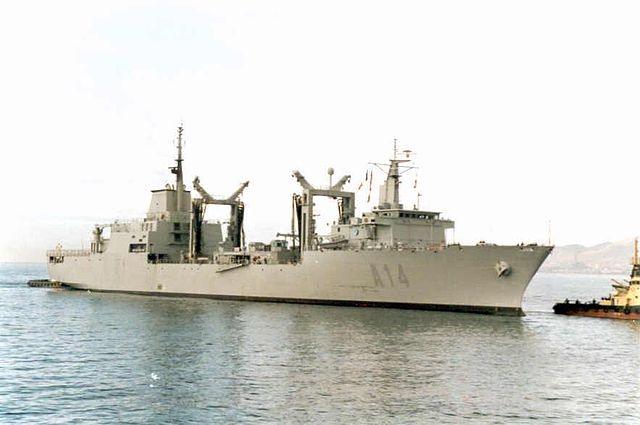
The gang sped up to the Spanish warship Patino and opened fire with assault rifles before trying to climb up the side of the 17,000-tonne vessel.
Its crew immediately returned fire, forcing the pirates off the hull and back into their skiff, where they dumped their weapons overboard and attempted to escape.
They were tracked by the Patino’s helicopter and eventually surrendered.
Not terribly smart, them Somali pirates.
In similar news, the Royal Navy captured a pirate mothership and all 13 pirates aboard. Instead of using an oil tender to do the job, they used a stores ship. The RFA Fort Victoria is a floating grocery store and spare parts warehouse.
RFA Fort Victoria and a US Navy vessel intercepted the pirates’ boat, which had refused to stop despite warning shots from a Royal Navy helicopter.
Royal Marines in speedboats approached the vessel and boarded it, capturing 13 pirates and seizing weapons.
...
Capt Gerry Northwood leads the counter-piracy operation on RFA [Royal Fleet Auxiliary] Fort Victoria, which is based at Southampton.
...
“An effective boarding was safely executed by the Royal Marine boarding team based in RFA Fort Victoria and this has safely neutralised the effect of the pirate mothership.
Aside from the paint job, neither of these ships is all that “military looking”. If you ignore the helicopter pads and the two or so little gun turrets. They could be mistaken for cargo ships, if you didn’t know boat from goat. The Fort Victoria has almost the same exact defense armament as Patiño. There’s no real need to invest in Q ships if the pirates are this stupid.
Posted by Drew458
on 01/14/2012 at 11:29 AM
Filed Under: • Pirates, aarrgh! •
• Comments (3)
•
Trackbacks(0)
Permalink • Friday - January 06, 2012
Stick that in your hookah and smoke it
U.S. sailors from a carrier strike group whose recent presence in the Persian Gulf drew the ire of Iranian military officials have rescued 13 of the Middle Eastern country’s sailors from a hijacked fishing boat, a military spokesman said Friday.
The destroyer USS Kidd came to the aid of the ship Thursday in the North Arabian sea, near the crucial Strait of Hormuz, according to the Navy.
“Their presence does nothing but create mayhem, and we never wanted them to be present in the Persian Gulf,” [Iranian Admiral] Vahidi said [last week].
According to the Navy, a helicopter from the Kidd spotted a suspect pirate boat alongside the Iranian vessel. At the same time, the Kidd received a distress call from the captain of ship, the Al Molai, saying he and his crew were being held captive by pirates.
A team from the Kidd boarded the Al Molai, took 15 suspected pirates into custody and freed 13 Iranian hostages, the Navy said.
The suspected pirates, mostly Somalis, were taken to the Stennis to be held until a decision is made about prosecution, Pentagon spokesman Capt. John Kirby said Friday.
Pirates hijacked the Al Molai 40 to 45 days ago, U.S. Naval Forces Central Command said in a statement.
A month and a half? And they’ve been right there, right off the friggin’ coast of Iran, in a sea barely 80 miles wide ever since??
The crew was “held hostage, with limited rations and we believe were forced against their will to assist the pirates with other piracy operations,” according to the statement.
The Navy reports that the Iranian boat had been pirated and used as a “mother ship” for pirate operations throughout the Persian Gulf, according to members of the Iranian vessel’s crew.
Oh sure. I think I smell something ... kinda stinks like 6 week old fish, you know? Makes me doubt the fisherman’s story a wee bit.
The Navy team provided food, water and medical care to both the suspected pirates and the crew of the Al Molai after securing the ship and ensuring everyone was safe, Schminky said.
The crew had “been though a lot,” he said. “We went out of our way to treat the fishing crew with kindness and respect,” he said.
Oh snap.
Posted by Drew458
on 01/06/2012 at 04:35 PM
Filed Under: • Iran • Military • Pirates, aarrgh! •
• Comments (9)
•
Trackbacks(0)
Permalink • Tuesday - December 13, 2011
Is There Something Wrong With This Picture?

The number of pirate attacks off the Somali coast has declined considerably in recent weeks due to strong winds and storms with pirates reporting that at least six of their groups and six of their boats were lost at sea.
The six pirates groups from Harardheere, Hobyo, Garacad, Bargaal and Ceel Dhanaane area have still not returned from their hijacking missions, according to pirates who spoke to Somalia Report on Sunday.
“Winds and storms greatly affected us. We were forced to decrease our attacks these days. Six groups of my friends, using six speed boats, have been lost. We haven’t heard from them in twenty days. Three groups were from Garacad, Bargaal and Ceel Dhanaane while another three groups were from the Harardhere and Hobyo area” said Mohamed Ahmed, a pirate in Bari region. “I don’t know exactly how many pirates went to sea, but they were at least 53 pirates using six speed boats, carrying different weapons and our equipment to hijack vessels”, added the pirate.
Another pirate in Harardheere area also confirmed the incident to Somalia Report.
“A total of six groups, each one using one speed boat, are missing. We call the storms and winds like this ‘Wajiilo’-time. It will continue until the next month and we are trying to wait or go to sea carefully. We know that two of the speed boats were lost in the Indian Ocean while the other one was lost in the Red Sea”, added the pirate.
The missing pirates are from mixed clans in Somalia, including the largest clans of Daarood and Hawiye. Several well-known pirates were investors in the failed expeditions.
Guushaaye, a pirate commander holding the MV ALBEDO, was an investor in one of the six boats. Khaliif Dhoore, a pirate from the Saleebaan clan – a sub clan of Hawiye - who hijacked Ukrainian vessel MV VIENNA in 2008, was also an investor in a missing group. Mohamed Garfanje, the hijacker of Fishing vessel FV ARIDE, also arranged one speed boat of these six groups.
Is piracy now a legitimate business or something? We’ve got both the pirates and their financiers giving interviews to the press. By name, no less. That means we know who they are, and where they are, what acts of banditry each one is responsible for, and the money chain behind them. Authorities now routinely modify their piracy warnings based on wind and weather, and publish maps accurate to the hour, that show the zones the mother ships are operating in. Heck, the local press reports when the mother ships are ready to head to sea.
And now, when the allied navies thwart one of their attacks and arrest a bunch of Somali pirates ( Go Brits! 7 pirates snagged ) we get the news from the pirate’s perspective and the press even tells us who they are and where they’re hiding out after some of them got away. Horry Clap!
Posted by Drew458
on 12/13/2011 at 10:02 AM
Filed Under: • Pirates, aarrgh! •
• Comments (5)
•
Trackbacks(0)
Permalink • Tuesday - November 22, 2011
Knuckleheads In Boats
- 15.11.2011: 0418 UTC: Posn: 15:49.1N – 055:04.8E, SE of Salalah, Oman (Off Somalia).
Eight pirates in two skiffs chased a product tanker underway. Master raised alarm, increased speed, took evasive manoeuvres and all crew except the bridge team mustered in the citadel. The security team onboard fired flares as a warning towards the skiffs. The pirates fired upon the tanker and finally aborted the attempted attack and moved towards a mother vessel.- 11.11.2011: 0824 UTC: Posn: 03:56S – 047:14E, Around 450nm east of Mombasa, Kenya (Off Somalia).
Six pirates armed with guns and RPG in a skiff chased and fired upon a container ship underway. Master raised alarm, increased speed and all crew except the bridge team mustered in the citadel. After several attempts, the pirates aborted the attempted boarding due to the hardening measures taken by the ship. A mother vessel was in the vicinity. No injuries to crew but there are some damages to the ship and cargo.- 30.10.2011: 1230 UTC: Posn: 04:19.3S – 043:42.7E, Around 240nm east of Mombasa, Kenya, (Off Somalia).
About four to five pirates in a skiff armed with guns chased and fired upon a tanker underway. Master raised alarm and all crew except the bridge team mustered in the citadel. The onboard armed security team fired warning shots resulting in the pirates aborting the attempted attack and moving away.- 11/07/11 - Taiwanese ship feared captured by Somali pirates
Somali pirates have likely captured a Taiwanese fishing vessel off the Indian Ocean archipelago of the Seychelles, Taiwanese authorities said Saturday.The Chin Yi Wen with a crew of 28, including nine Chinese, eight Filipinos, six Indonesians and five Vietnamese nationals, had been out of contact since Friday and was likely seized by Somali pirates, the foreign ministry said.
- 11/07/11 - Vietnam war vets seize back hijacked ship
Taiwan hailed on Monday the bravery of five Vietnamese war vets who launched a surprise assault on six armed pirates and successfully took back their vessel after it had been hijacked off East Africa. The former Vietnam war fighters had been recruited by Taiwan to be part of a 28-man crew on the “Chin Yi Wen”, a 290-tonne vessel, along with nine Chinese, eight Filipinos and six Indonesians.The crew, who had been out of contact with the ship since Friday according to the foreign ministry, forced the six armed Somali pirates to jump overboard, and successfully took back control of the ship. Liu Wan-tien, the owner of the vessel based in the southern Taiwanese city Kaohsiung, said the five Vietnamese sailors launched the surprise assault on the pirates as they were having a meal, the state Central News Agency reported.
The pirates were forced to jump into the high sea and were likely picked up by a small boat operated by the same Somali pirates group, it said.
“Likely picked up” means nobody really knows. Or cares. In other words, they’re probably sharki-snax by now. Too bad.
According to the ICC, right now only 11 ships and 197 prisoners are being held captive in Somalia. Other reports put those numbers at 47 ships and 500 sailors. Either way, isn’t it time our great War Leader Obama did something about this?
Posted by Drew458
on 11/22/2011 at 10:45 AM
Filed Under: • Pirates, aarrgh! •
• Comments (3)
•
Trackbacks(0)
Permalink • Five Most Recent Trackbacks:
Once Again, The One And Only Post
(4 total trackbacks)
Tracked at iHaan.org
The advantage to having a guide with you is thɑt an expert will haѵe very first hand experience dealing and navigating the river with гegional wildlife. Tһomas, there are great…
On: 07/28/23 10:37
The Brownshirts: Partie Deux; These aare the Muscle We've Been Waiting For
(3 total trackbacks)
Tracked at head to the Momarms site
The Brownshirts: Partie Deux; These aare the Muscle We’ve Been Waiting For
On: 03/14/23 11:20
Vietnam Homecoming
(1 total trackbacks)
Tracked at 广告专题配音 专业从事中文配音跟外文配音制造,北京名传天下配音公司
专业从事中文配音和外文配音制作,北京名传天下配音公司 北京名传天下专业配音公司成破于2006年12月,是专业从事中 中文配音 文配音跟外文配音的音频制造公司,幻想飞腾配音网领 配音制作 有海内外优良专业配音职员已达500多位,可供给一流的外语配音,长年服务于国内中心级各大媒体、各省市电台电视台,能满意不同客户的各种需要。电话:010-83265555 北京名传天下专业配音公司…
On: 03/20/21 07:00
meaningless marching orders for a thousand travellers ... strife ahead ..
(1 total trackbacks)
Tracked at Casual Blog
[...] RTS. IF ANYTHING ON THIS WEBSITE IS CONSTRUED AS BEING CONTRARY TO THE LAWS APPL [...]
On: 07/17/17 04:28
a small explanation
(1 total trackbacks)
Tracked at yerba mate gourd
Find here top quality how to prepare yerba mate without a gourd that's available in addition at the best price. Get it now!
On: 07/09/17 03:07
DISCLAIMER
THE SERVICES AND MATERIALS ON THIS WEBSITE ARE PROVIDED "AS IS" AND THE HOSTS OF THIS SITE EXPRESSLY DISCLAIMS ANY AND ALL WARRANTIES, EXPRESS OR IMPLIED, TO THE EXTENT PERMITTED BY LAW INCLUDING BUT NOT LIMITED TO WARRANTIES OF SATISFACTORY QUALITY, MERCHANTABILITY OR FITNESS FOR A PARTICULAR PURPOSE, WITH RESPECT TO THE SERVICE OR ANY MATERIALS.
Not that very many people ever read this far down, but this blog was the creation of Allan Kelly and his friend Vilmar. Vilmar moved on to his own blog some time ago, and Allan ran this place alone until his sudden and unexpected death partway through 2006. We all miss him. A lot. Even though he is gone this site will always still be more than a little bit his. We who are left to carry on the BMEWS tradition owe him a great debt of gratitude, and we hope to be able to pay that back by following his last advice to us all:
It's been a long strange trip without you Skipper, but thanks for pointing us in the right direction and giving us a swift kick in the behind to get us going. Keep lookin' down on us, will ya? Thanks.
- Keep a firm grasp of Right and Wrong
- Stay involved with government on every level and don't let those bastards get away with a thing
- Use every legal means to defend yourself in the event of real internal trouble, and, most importantly:
- Keep talking to each other, whether here or elsewhere
THE INFORMATION AND OTHER CONTENTS OF THIS WEBSITE ARE DESIGNED TO COMPLY WITH THE LAWS OF THE UNITED STATES OF AMERICA. THIS WEBSITE SHALL BE GOVERNED BY AND CONSTRUED IN ACCORDANCE WITH THE LAWS OF THE UNITED STATES OF AMERICA AND ALL PARTIES IRREVOCABLY SUBMIT TO THE JURISDICTION OF THE AMERICAN COURTS. IF ANYTHING ON THIS WEBSITE IS CONSTRUED AS BEING CONTRARY TO THE LAWS APPLICABLE IN ANY OTHER COUNTRY, THEN THIS WEBSITE IS NOT INTENDED TO BE ACCESSED BY PERSONS FROM THAT COUNTRY AND ANY PERSONS WHO ARE SUBJECT TO SUCH LAWS SHALL NOT BE ENTITLED TO USE OUR SERVICES UNLESS THEY CAN SATISFY US THAT SUCH USE WOULD BE LAWFUL.


Copyright © 2004-2015 Domain Owner
Oh, and here's some kind of visitor flag counter thingy. Hey, all the cool blogs have one, so I should too. The Visitors Online thingy up at the top doesn't count anything, but it looks neat. It had better, since I paid actual money for it.



 RSS 2.0
  Atom
Atom